All posts by sperling

One of the most popular performances that we provide backdrops for is the annual showing of the Nutcracker Suite across the country. With more than 132 options of backdrops, it is no wonder our organization is one of the top suppliers for performances of this beloved holiday show. 

In past blogs, we have explored some of our most popular backdrops for the Nutcracker Suite. In this blog, we would like to take a look at some of the alternative backdrops that some groups like to rent for their performances. 

The Acts and Alternative Sets of Nutcracker Suite 

The Nutcracker has three acts with the first act being the “Party Scene” which commonly is depicted by a Victorian home scene. Some organizations, however, choose palace backdrops instead of a Victorian home appearance. 

Act Two involves the “Land of Sweets” in which many theater organizations choose to use fairyland palace backdrops rather than a candy palace. And lastly, Act Three is the “Snow Forest” scene with multiple options from our comprehensive inventory. 

Let’s take a look at some of these alternative backdrops that may help your theater group this year. 

The Party Scene Alternatives

If your set designers are looking for an alternative to the Victorian home set, these palace backdrops may work for your performance. 

palace interior

This Palace Interior Backdrop #2363 shows a stunning yellow interior of a mansion with a center window, columns, balustrades, sculptures, and a balcony. 

Another alternative option that organizations lean toward includes this Palace Grand Staircase Backdrop #2054 which shows a main foyer staircase with statues and three large windows.

The Land of Sweets 

As the Nutcracker performance progresses, the scene changes to the “Land of Sweets” in Act Two. Instead of choosing one of the candy palace backdrops, some groups instead choose the fairyland look of a palace such as Palace Interior Backdrop #2358. This backdrop shows an ornate palace interior with gold chandeliers and purple draperies

Gold arches with pink and blue stripes

This candy-colored palace backdrop would also be a great choice for the “Land of Sweets” Act. This Palace Interior Backdrop #2542 displays a pink and blue wall with ornate gold arches and shields.

This Palace Interior Backdrop #2350 is also a wonderful option for the “Land of Sweets” scenes as it shows an ornate palace interior with gold chandeliers and pink draperies. 

The Snow Forest 

For the scenes that take place in the snowy forest during Act Three, there are a few options that will have you debating which might be best for your performance. These include the Snow Village Backdrop #3168 which depicts a winter landscape with a town nestled in the valley.

Additionally, organizations have used Ice Palace Backdrop #3089 which depicts a beautiful winter landscape at night showing a large snow and ice palace.

NutcrackerFor a complete inventory list of Nutcracker Suite backdrops, visit our show suggestion page under Nutcracker


The musical My Fair Lady chronicles the lessons of Professor Henry Higgins as he attempts to educate and culturally transform Eliza Doolittle into a proper-speaking lady of England. Their lessons allow us to explore social themes that are still important in our society today. These themes include social discrimination and linguistic profiling. 

The Story of My Fair Lady

Eliza Doolittle, a young woman who hails from East London and possesses a dialect that is described as cockney, finds herself in speech lessons with an overconfident and somewhat pompous Professor Henry Higgins. He makes it his goal to rid her of the cockney dialect that is common to working-class or middle-class Londoners during the 1950s. 

The social experiment to teach the “proper” way to pronounce words takes her out of her middle-class lifestyle and has her attending horse races and balls that the upper class or London elite attend. 

Sadly, Professor Higgins and his trusty side-kick, Colonel Pickering, end up making Eliza feel less than human as they make strides toward transforming her. Eventually, she flees from the Professor who begins to understand that he is, indeed, in love with Eliza. 

Some of the more popular musical numbers in My Fair Lady include “Wouldn’t It Be Loverly,” “The Rain in Spain,” and “I Could Have Danced All Night.” This beloved musical is based upon George Bernard Shaw’s Pygmalion and with book and lyrics by Alan Jay Lerner and music by Frederick Loewe.

Backdrops for My Fair Lady 

London is the main setting of the musical and the specific locations within the city include the East London streets and tenements, Professor Higgins’ study, the Opera set, and the garden. Here are some of the backdrops we offer that can help set your performance of My Fair Lady

The Streets of London

To set the stage for scenes that include the streets of London, this backdrop titled Street Legs–My Fair Lady Backdrop #2053 displays brick storefronts and a pub with a Guinness sign in the window. 

We also offer this Street Legs–My Fair Lady Backdrop #2039 in coordination with the above backdrop. It shows brick storefronts selling cigarettes and looking for players. 

The Professor’s Study 

To set the stage for the scenes that take place in Professor Higgins’ study the following backdrops would be perfect with walls of books, staircases, and large windows. This option, called Higgins Study with Backing Backdrop #0382 provides specifications for a staircase that can be built in the back of the two backdrops. 

The Ballroom Backdrop 

During the scene where Professor Higgins exposes Eliza to a ball, the Conservatory Backdrop #NO549 would be appropriate. This backdrop shows a neutral Victorian interior with center stairs leading up to a conservatory.

For all 50 backdrops in our collection designed for My Fair Lady, please visit our show suggestion page. 


What happens when you combine a man-eating plant, a nerdy plant-loving florist shop employee, and a romantic love interest? You get a gleefully gruesome and beloved musical called Little Shop of Horrors of course! 

This rock musical was composed by Alan Menken and written by Howard Ashman. It is based on the low-budget 1960 black comedy film The Little Shop of Horrors, directed by Roger Corman. 

Let’s explore this tantalizingly romantic/horror performance and how Charles H. Stewart Backdrops can help elevate your performance to the next level. 

The Story of the Little Shop of Horrors

Little Shop of Horrors chronicles the life of a meek and nerdy flower shop botanist named Seymour Krelborn. His work at Mushnik’s, a flower shop in urban Skid Row, leads him to develop a crush on co-worker Audrey Fulquard. 

During his time at the shop, he seeks out fortune and fame, two things he dearly lacks, by finding mysterious and unique plant specimens. He comes across a plant that he names Audrey II, in honor of his crush. While this seems sweet and innocent, the audience soon finds out that the plant only wants to eat humans! 

Seymour becomes the nursemaid and feeder of the plant who will later eat Audrey’s boyfriend and the mean shop owner. Seymour realizes the frightening pace of the plant’s growth and desire for more blood when it tries to eat Audrey. He fends off the attacks and eventually wins in the battle for life and death by electrocuting the plant. 

Audrey recognizes the good in Seymour and they head off into “happily ever after,” that is until they enter their new home and realize that an offshoot of Audrey II was growing in their garden. 

Backdrops for Little Shop 

Little Shop of Horrors takes place mainly on Skid Row, a largely impoverished community in Las Angeles, and in a small florist shop called Mushnik’s. To make this production come to life, we offer 9 backdrops that have been created with this musical in mind. 

Here are a few that will help your performance come to life and shock your audience as Seymour struggles with the plant’s unique appetite and his growing feelings for Audrey. 

The central location for most of this performance takes place in the impoverished area known as Skid Row and within the walls of the flower shop where Seymour feeds his exotic plant and his love blossoms for Audrey. This ​​Flower Shop Backdrop #0107 shows a beautiful scene with many flowers and plants in a greenhouse. The backdrop also shows a farmhouse and trees. 

Alley

For street scenes of Skid Row, this Alley Backdrop #1801 shows a back alley littered with trash, an old sofa, fence, and hanging laundry.

Also suitable for the Skid Row aesthetic is New York Street Backdrop #2512 which depicts the Washington Heights neighborhood of New York City. Included on the backdrop is an elevated train, the George Washington Bridge, and the skyline of New York in the background.

To view all the backdrops in our inventory suitable for the Little Shop of Horrors, please visit our suggested shows pages and explore all we have to offer. 


Audiences of all ages love the eight-time Tony Award-winning Hairspray, the Musical. The 1960s-style music, the cheerful dancing, the colorful costumes, and (of course) the lively backdrops make this musical one you will be tapping with the beat and belting out the lyrics for days! 

The Story of Hairspray 

Big-haired teenager Tracy Turnblad has always dreamed of dancing on the Corny Collins Show, a television dance program, but she lacks the trim waistline and the dance moves to be chosen as a dancer. With the help of her black friends, she learns some killer downtown rhythm and blues moves that allow her to pursue her dream of making the show. 

Once chosen, she works to integrate the show so that black and whites can all dance to toe-tapping 1960s music. While the musical is upbeat, colorful, and generally has a positive message, it is also a social commentary on the injustices of American society and the inequities that still exist today. 

Hairspray is a musical with music by Marc Shaiman, lyrics by Scott Wittman and Shaiman, and a book by Mark O’Donnell and Thomas Meehan, based on the 1988 John Waters film Hairspray

Backdrops To Set the Scenes of Hairspray 

Hairspray takes place in Baltimore, Maryland, and has scenes in multiple locations including Corny Collins’ television dance studio, the high school gym, the Turnblad home, and a record store. Each scene may require set changes and could use multiple backdrops. Or, depending on the set design/backdrop budget, you could choose one backdrop and change lighting and angles to change the overall mood of the scene. 

Here are some options that could be used for specific scenes or used throughout the entirety of the performance. 

center stage

This Center Stage Backdrop #2407 shows a stage with floor lights, spotlights, and drapery curtains. Use this for television show scenes or as a high school stage. 

record warp

Looking for a dance-vibe backdrop? This Record Warp III Backdrop #2318 displays wavy musical notes with floating records and yellow stars. This could be used specifically for the scenes with the Corny Collins show or as a general backdrop. 

Gymnasium backdrop

For scenes in the high school or gymnasium, this Gymnasium Backdrop #2352 shows a high school gym with bleachers, exit doors, and lights. 

novelty

If you are looking for a backdrop for the Corny Collins show or scenes where Tracy practices her dance moves, this 1950s Novelty Backdrop #2319 will bring you back to the bee-bop days of dance with the musical note scroll, jukeboxes, and silhouettes of a guy in a leather jacket and a girl in a poodle skirt.

For all 33 backdrops designed with Hairspray, the Musical in mind, visit our website and start exploring how you will set the stage for your special production. 


At some point in all of our lives, we have weighed the consequences of making a “deal with the devil” to get something we really want. The Little Mermaid tells the story of a young mermaid princess who makes just such a deal with a sea witch to find out what life is like living as a human. 

The Little Mermaid is a favorite production that attracts Disney lovers, children, and adults alike. The show is filled with catchy lyrics, unique sea creature characters, and lessons of life that come to the surface, so to speak. The concepts of not giving up on a dream, that no dream is too big or too small, and that we all have a voice so we should use it wisely are at the forefront of these messages and lessons. 

The Story Of The Little Mermaid

The story of The Little Mermaid chronicles the life of a naive and somewhat rebellious 16-year-old mermaid named Ariel, who happens to be the daughter of Triton, King of the Sea. 

Unhappy as a mermaid, Ariel longs to know what life on land would be like and the hope of love with a young prince who crossed her path on the water. Ariel makes a dangerous deal with Ursula, a sea witch who steals her voice while Ariel has three days on land to win the heart of her prince. If she can not make him fall in love with her in three days time she will lose her soul to the evil sea witch. 

In the end, as with almost all Disney-inspired musicals, everything works out for the star-crossed lovers and they even receive the blessing of Triton as he accepts his daughter for who she wants to be. 

Backdrops for Setting Under The Sea 

As many of the scenes for The Little Mermaid occur either under the sea, on a boat, or on the coastline, Backdrops by Charles H. Stewart offers a wide assortment of backdrops that will work for this beloved performance. 

underwater

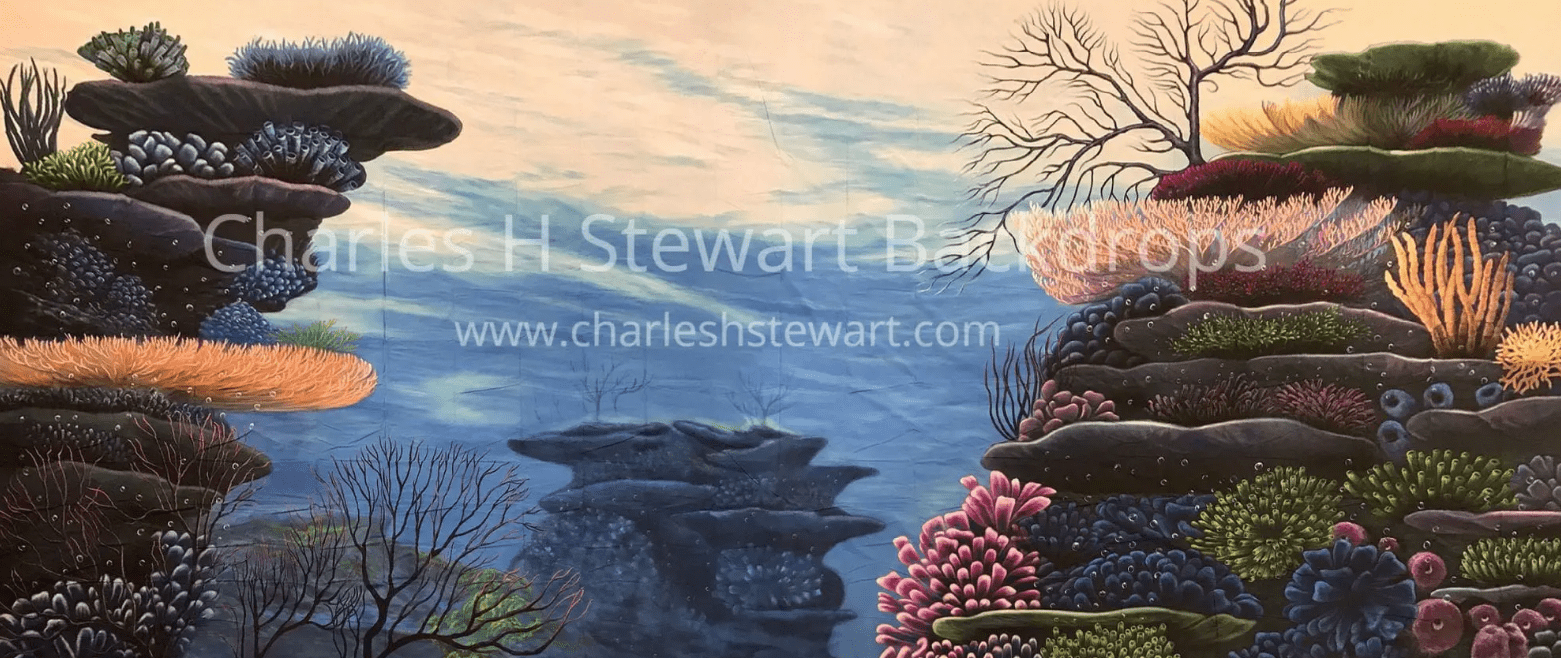
This stunning Underwater Backdrop #2518 depicts a blue ocean with a coral reef and brightly colored sea life.

Rocky Coast

This Rocky Coast Backdrop #1488, showing a rocky beach with surrounding cliffs is the perfect combination of land and sea for Ariel and her prince. 

tropical island

Yet another option is the Tropical Beach Backdrop #2391 which is aesthetically pleasing with a beautiful tropical beach showing the ocean, and blue sky with clouds under the shade of palm trees. 

Explore all of the backdrops for The Little Mermaid on our site and get started creating the perfect backdrop for your performance. 


Mood is a key element in any performance whether it is: a musical or dramatic performance, on a high school stage or under the big lights of Broadway. The audience can sense the mood and atmosphere through the lighting, music, set design, props, clothing and the tone given off by the actors. The performers can add to the mood by using specific dialogue, facial gestures and movement. Here at Backdrops by Charles H. Stewart, we know the importance of setting the tone, atmosphere and mood from the moment the curtain rises. Let’s take a look at ways to set mood during a performance and through set design.

Crafting the Perfect Ambience in Theatre

Lighting

Lighting is probably one of the most straight-forward ways to set a mood on stage. From full stage illumination to a single spotlight, the mood can change from wild, happy and energetic to somber and quiet. The intensity, coloring and direction of the lighting can help set a mood that will be mirrored by the actors on stage.

Backdrops

Backdrops and drapes come in all sorts of scenic designs and colors. Backdrops by Charles H. Stewart can enhance your production by allowing for dramatic shifts with the use of different backgrounds.

Music

The music or score of any production works with the plot, acting, lighting and dialogue to create a mood that is unique to the action on the stage. In addition to the score, sound effects such as doors opening, floorboards squeaking and bells ringing can increase the dramatic effect.

Costumes and Props

While every play/musical has its own set and costume design, these items can also play into the atmosphere that the director wants to portray. Whether the play is set in the 18th Century or the 1980s, the clothing and props worn and used by the actors is just one more component that adds to the overall mood of the performance.

Pivotal Role in Setting the Mood in Theatre

We all know theatre is a fabricated representation of real life. However, when setting the mood in theatre, actors need to play on real emotions of real members of the audience in order to gain the reactions necessary. There are a few critical aspects of surroundings and physical appearance that evoke certain emotions realistically, and they are a pivotal part of setting the mood in theatre.

Characterization

An actor brings a character to life on stage. Their job is to influence the atmosphere for everyone present and through their depiction of the character, they have the ability to set whatever mood they want for the audience. A sorrowful monologue or a jubilant victory speech can dramatically change the mood of the scene.

Voice Inflection and Tone

Everyone has experienced raising their voice and speaking down an octave while angry, a soft whimper when upset, or loud and bubbly when happy. By modulating their voice, actors can convey emotions, create tension, or establish a specific atmosphere. The way they speak, whether it’s through volume, pitch, pace, or rhythm, significantly influences the audience’s perception of the scene.

Physical Expression and Body Language

“Actions speak louder than words” could not be more true in this situation. Sometimes a simple physical gesture can evoke more emotion than speech both in real life and on stage. An actor’s physicality helps create a visual language that enhances the audience’s understanding and emotional connection to the scene.

Facial Expressions

These are sometimes hard to hide in real life when you don’t want to show you’re upset or maybe frustrated. On stage however, facial expressions are sometimes the most moving and mood evoking aspect. Actions as subtle as narrowing ones eyebrows, widening eyes, or pursing lips together can convey a wide range of emotions, adding depth to a character and creating an overall ambiance.

Interaction with Other Characters

Through their dialogue, physicality, and emotional exchanges, actors can create tension, intimacy, conflict, or harmony, significantly shaping the mood and energy of the performance. The chemistry between actors contributes greatly to the overall emotional impact on the audience.

Reacting to the Environment

By incorporating their surroundings into their actions, actors have the ability to create a rich atmosphere where they have the power to control emotions. Set design, lighting or sound cues are examples of impactful interactions with their environment.

Timing

Timing is critical in any type of performance. Precise execution of dramatic or comedic moments, intentional pauses, and any purposeful disruption to an ongoing rhythm is a theatrical art. An actors’ ability to control timing and pacing enhances the desired effect of emotional responses.

Use of Space

The way that actors move around the stage, where and how much space they choose to occupy along with their proximity to other characters or objects can be very telling of the mood of the scene. Spacial relations can help convey dynamics, emotions, intimacy and even foreshadow future situations.

Improvisation

In theatre, improvised scenes aren’t rehearsed beforehand, and when something is said or done spontaneously, it can create a raw emotion and mood that an audience is bound to feel. Improvisation adds a sense of authenticity and unpredictability that can easily sway the theatre’s mood.

Set The Right Atmosphere in Theatre

Need help creating a mood for your set design? Take a look here on our website at the wide range of backdrops we offer and be sure to contact us to purchase or rent. The possibilities are endless.


Godspell is a time-honored musical that touches on the themes of life, loyalty, and love as told in a series of parables, according to the Gospel of Matthew. The musical, which first came to Broadway in 1971, was one of the first musical theatre offerings from composer Stephen Schwartz who would later go on to write such well-known hits as Wicked, Pippin, and Children of Eden.

The Story of Godspell 

Godspell has been a favorite musical of theater groups and professionals for decades as it can be adapted to different audiences and settings. The story of Godspell follows a series of well-known parables that are found in the Gospel of Matthew and are told by philosophers and thinkers as well as by Jesus directly. The cast uses many different acting methods such as comedy, pantomime, and physical humor to tell the stories. 

The music of Godspell can be described as both modern rock and rock opera depending upon the angle that each production takes. Musical favorites include “Prepare Ye the Way of the Lord,” “Learn Your Lessons Well,” “All for the Best,” “All Good Gifts,” “Turn Back, O Man,” and “By My Side.”

As the parables continue throughout the performance, the last days of Jesus draw near and each cast member must deal with their own questions and doubts. Some of the most beloved, yet haunting scenes by the small cast are the Last Supper and the Crucifixion of Christ which leave audiences in tears. 

Backdrops for Godspell 

One of the more unique aspects of this spiritual and religious performance is that it can be set practically anywhere from an urban setting to one at a neighborhood playground thus emphasizing the concept that we are all children of Christ no matter where we are in the world. 

Here are a few of our suggestions for potential backdrops that include urban and suburban settings as well as schools and outdoor locations. Choose what works best for your theater group and get started practicing this amazing and beloved musical. 

A popular option for a backdrop is the city skyline. We suggest a few that may work for your organization’s performance. This Night Skyline Backdrop #2451 depicts a night skyline with a bridge and the reflection of city lights in the sky. This is perfect for the setting of a modern-day Godspell performance. 

Daytime NYC

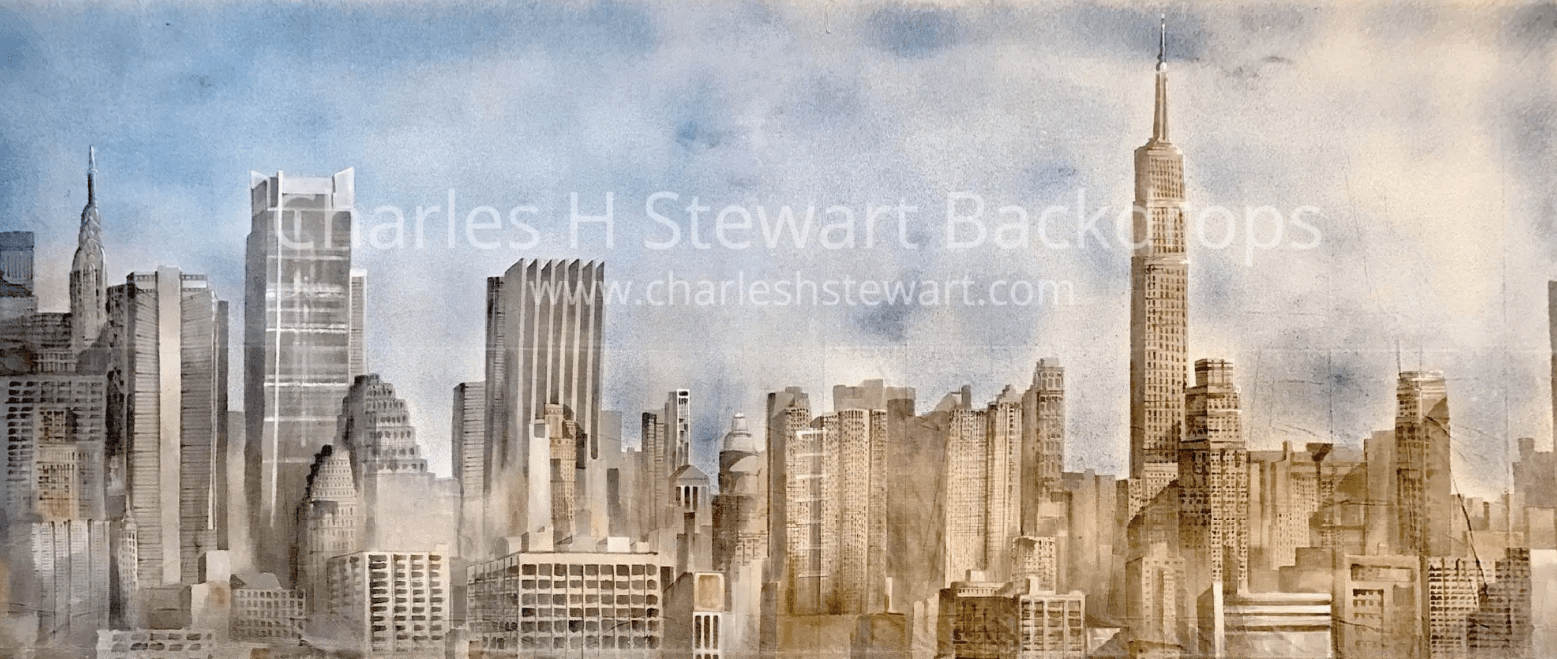
A daytime setting is also an option. This Daytime New York Skyline Backdrop #2226 shows an image of Downtown Manhattan with the Empire State Building prominently displayed. 

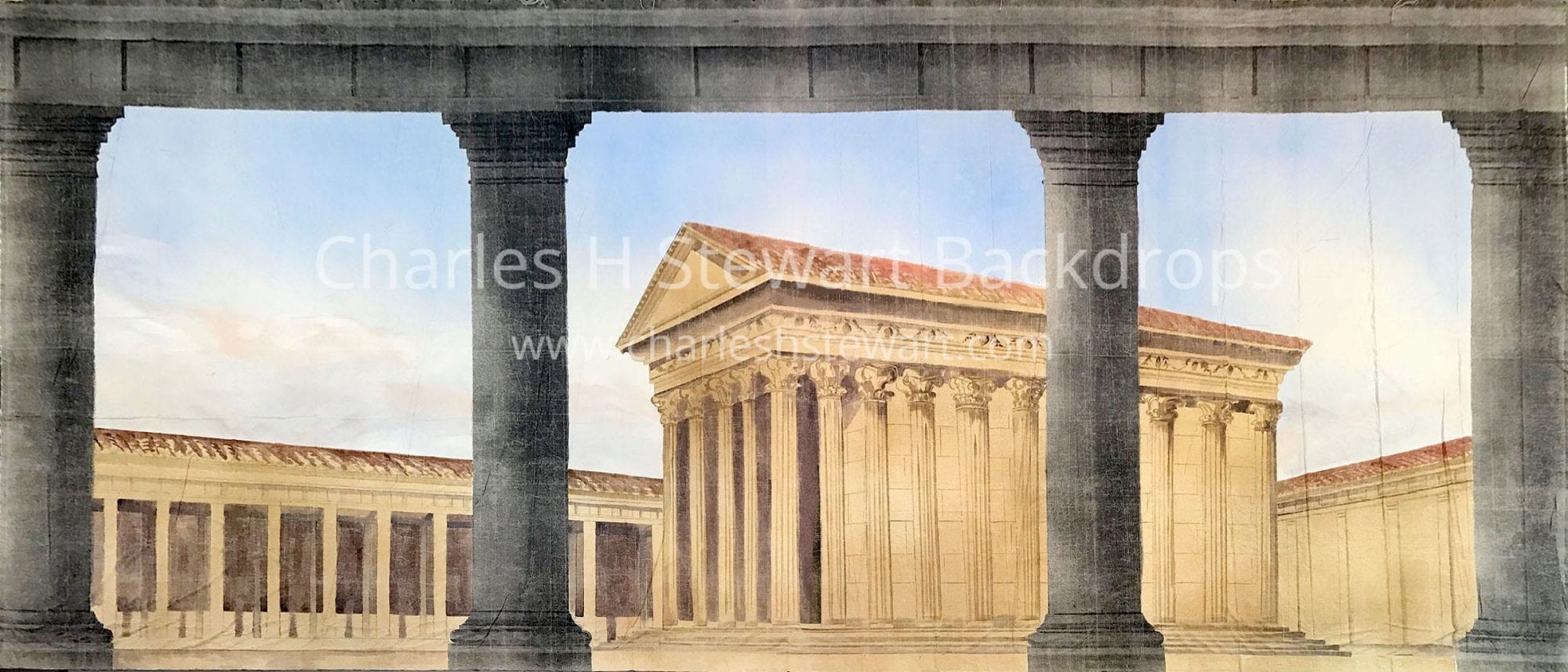
Roman backdropFor groups that wish to have a more historical twist to the performance, there are several backdrops that depict ancient cities and scenes. This Roman Street Backdrop #2213 gives the appearance of being in olden times with the Colonnade looking out over Rome. 

Another option is the backdrop of the Egyptian Landscape #1970. This one shows the Pyramids and the Sphinx set against a light blue sky. 

To explore all of the backdrops appropriate for Godspell visit the show suggestion page and get your order started. 


As is often the case in the works of William Shakespeare, love is a major theme in Midsummer Night’s Dream. Written in 1595 by the well-known English poet, this story tells the tale of the events surrounding the marriage of Theseus, the Duke of Athens, to Hippolyta the former queen of the Amazons. 

The story chronicles four Athenians who have run away to the forest only to have Puck, a servant of Oberon, the King of the Fairies, create a magic potion that will make them fall in love with the first person they see! 

Thematically, Shakespeare explores the ideas of what love is as well as how appearance and reality take a role in that. He also delves into the concepts of order versus disorder. These themes emerge as the audience meets the four main characters: Helena, who is hopelessly in love with Demetrius; Demetrius, who is in love with Hermia; Hermia who is in the process of escaping from her father’s arranged marriage with Demetrius; and Lysander who is trying to elope with Hermia. 

The four characters run through the forest pursuing each other while devious Puck helps his master play a trick on the fairy queen. When Oberon demands that Puck uses the potion on Demetrius, hilarity ensues as Puck accidentally uses the potion on the wrong couples causing confusion and absolute chaos in the forest. In the end, Puck reverses the magic, and the two couples reconcile and marry.

Backdrops for Midsummer Night’s Dream 

Most of this play, one of Shakespeare’s most popular works, takes place in the forest where the young couples roam and the fairies play tricks on them. Backdrops By Charles Stewart offers more than 22 backdrops appropriate for a production of Midsummer Night’s Dream, but here are several of our favorites. To view all of the options, please visit our suggestions page

forest

You can almost picture Puck here in the Forest Backdrop #2510 as he plays devious tricks on the Athenian couples. The thick forest vegetation and lush foliage give the appearance of many hiding spots for the fairies to play tricks. 

Garden

This Garden Backdrop #2278 creates a Grecian-style atmosphere with Athenian columns and pink flowers. The Colonnade is the perfect place to introduce our two couples and the King of the Fairies. 

Garden

Yet another Garden Backdrop # 2336 shows more of a Tuscan-style garden with flowers, a stone wall, and arborvitae trees.

To explore more options for your production, visit Backdrops By Charles H. Stewart and search the Midsummer Night’s Dream page

If you had the chance to never grow up and deal with adult problems, would you do it? The mischievous Peter Pan would!

Peter Pan the Musical opened at the Winter Garden Theatre on Broadway on October 20, 1954, and in London more than 50 years prior. The original run on Broadway only opened for 152 shows but has since been adapted to television, movies, and theater groups across the country. In 1955, the production won three Tony Awards for Best Performance by a Leading Actress in a Musical, Best Performance by a Featured Actor in a Musical, and Best Stage Technician

The Story of Peter Pan 

The beloved story of the boy who never wanted to grow up has enchanted audiences for over 100 years. 

Peter Pan, a young mischievous child, returns to the home of the Darling family from his home of make-believe named Neverland. His return, with his sidekick Tinkerbell, is prompted when Peter realizes that he lost his shadow in the Darling home. 

Peter Pan explains to the children that Neverland is home and that they can join the rest of the Lost Boys if they choose to never grow up. The children learn to fly and go on adventures with Peter to the island that is home to not only the Lost Boys but to pirates who want to capture the children. Captain Hook leads the pirates and is hounded by the crocodile who bit off his leg and an alarm clock ticking is heard as he comes closer to Hook and the children. 

The ensuing sword fights, pirate antics, and flying make for an enchanting and fun production for children and adults alike. In the end, the Darling children choose to return home and leave Tinkerbell and Peter to be forever young in Neverland. 

Backdrops Created With Peter Pan In Mind 

The production, originally composed of three acts, eventually expanded to five to explore Neverland (Peter’s home where he never had to grow up). The expansion of the story allowed for more adventure in Neverland, on a pirate ship, and flying in the sky. It captivates audiences with sword fights, singing pirates, and the world of make-believe. The production starts in the home of the Darlings, specifically in the nursery or children’s bedroom – Wendy, John, and Michael. 

Victorian Interior This backdrop Victorian Interior Backdrop #2555 would be a perfect Darling home bedroom with the blue Victorian aesthetic with stencil wallpaper, ornate curtains, and large windows.

To portray Neverland, Peter Pan’s home with the Lost Boys and Tinkerbell, this specifically designed backdrop Neverland Backdrop #2492 shows the tropical island as well as Captain Hook’s pirate ship. 
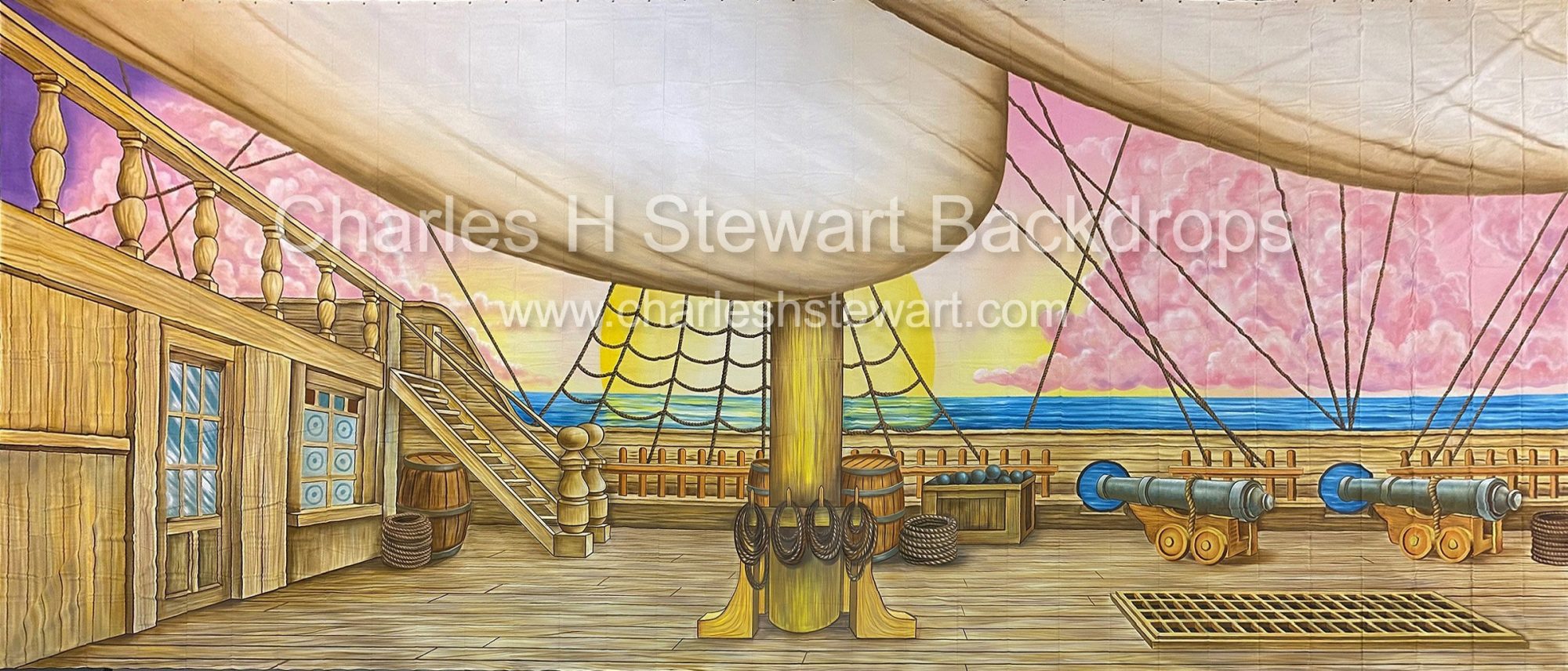
Pirate ship For the close interactions with Captain Hook, the alligator, and the pirates, this Pirate Ship Deck Backdrop #2583 shows an old, wooden ship deck with canvas sails, cannons, ropes, and pulleys. 

Scenes, where Peter Pan is teaching the Darling children how to fly over the city to his home, may find that this backdrop European Rooftop Backdrop #2516 is perfect. The backdrop shows a  London rooftop showing Victorian chimneys, St Paul’s Cathedral, and a purple sky.

For a full inventory of our Peter Pan, the Musical backdrops visit our show pages and get started planning your set today.